
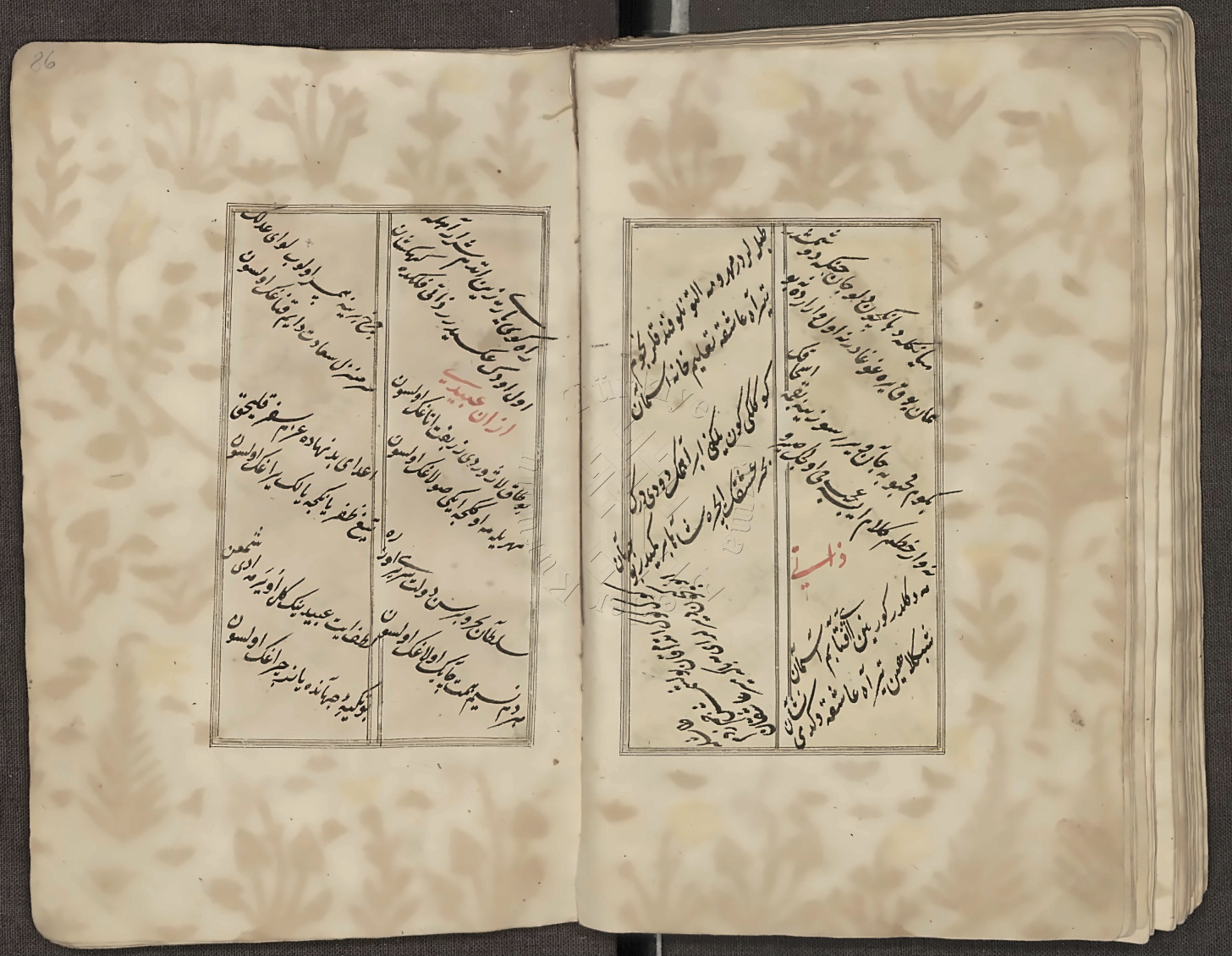
Decorated Paper 2.0 Workshop
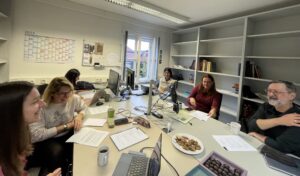
The GLOBAL DECO PAPER team gathered for a three-day workshop titled “Decorated Paper 2.0”with affiliated researcher Jake Benson. The event brought together hands-on database work, lively discussions on terminology and technique, and inspiring insights into the global history of decorated papers.
Day One: Deep Dive into the Database
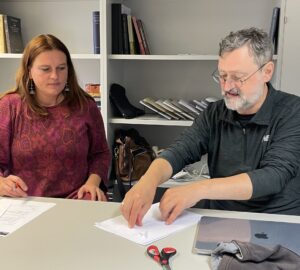
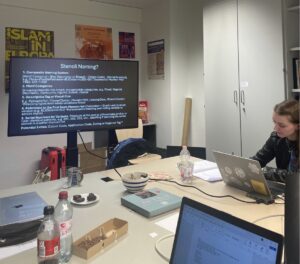
Our workshop began with a full day dedicated to the database. Mandana and Lily opened the session with an introduction to their recent tracing work, showing how they have been tracing stencil designs and experimenting with digital tools such as Affinity. Their presentation sparked a rich discussion on positive versus negative stencil designs and the subtle motifs that appear within them.
From there, we delved into issues of standardised sheet sizes and terminology, before Hanieh took the floor to present her ongoing IT development work. She explained how she has been updating the database and website in tandem, making it easier for us to search manuscripts by specific decorative techniques.
The group then debated which terms should be added as dropdown options in the database, clarifying distinctions between masking and mounting, and defining different parts of a page layout. As the day progressed, our focus turned to finer structural details – such as onlays and infills – supported by visual examples that helped refine our understanding and classification of these features.

Day Two: A Journey Across Cultures with Jake Benson
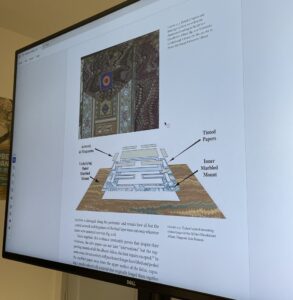
The second day was led by Jake Benson, who treated us to a captivating presentation on his forthcoming book on paper marbling and its sources across East Asia, the Islamic world, and Europe. His study will bring together 30 primary textual sources in 12 different languages – an extraordinary achievement!
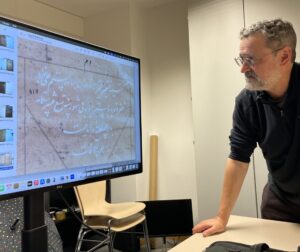
Jake shared drafts of his chapters and introduced a wide range of historical examples, including many from the alba amicorum featuring stencilled-marbled and silhouetted papers. These examples generated lively discussion and excitement, especially regarding European albums not yet examined in this context.
Our team, in turn, shared marbled papers encountered recently in libraries – bifolia, quires, and margins showing fascinating combinations of stencilling and marbling. We even discussed the stencilling of headpieces! The exchange culminated in a collaborative review of our terminology collection, where Jake offered his expertise on marbled paper classification.
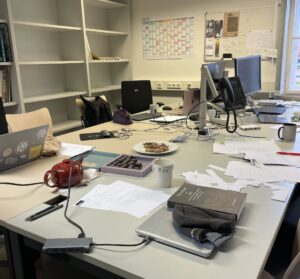
The day concluded with a wonderful dinner at a nearby Sicilian restaurant, where conversation flowed as easily as the wine – an evening filled with good food, laughter, and continued reflections on decorated paper.
Day Three: Conferences, Presentations, and Next Steps
The final day began with a session devoted to conference planning. We discussed our upcoming two-day conference at the CSMC in Hamburg next October, defining the theme, potential participants, and format. We also touched on other forthcoming events, including the EHG, AIS, and IPH in 2026, as well as ICTA in 2027. The team is especially looking forward to our virtual round table with the Consortium for History of Science, Technology and Medicine in February 2026.
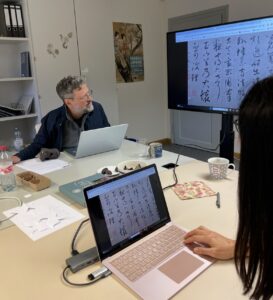
In the afternoon, Yih-chuen, Theresa, and Negar each presented their latest research. Yih-chuen shared discoveries from her recent stay in New York City, highlighting printed papers found in catalogues there. Theresa offered insights from her summer research in Egypt and the UK, particularly on prefabricated stationery paper and stencilled manuscripts. Negar concluded with her findings on silhouette paper, showcasing a series of striking Ottoman examples. Throughout the talks, cross-references between printed, stencilled and silhouette techniques sparked dynamic discussion and new research connections.
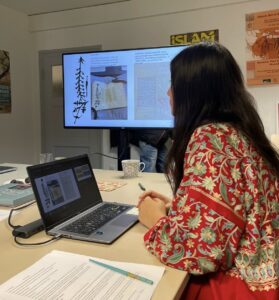
The workshop closed with concluding remarks by Ilse, who summarised the key outcomes and outlined the next steps for the team.
As we wrapped up, we all felt invigorated by the exchange of ideas and the wealth of new insights gained over these three days. We look forward to welcoming Jake back in January for further database development and potential collaborative research trips next summer.
The Decorated Paper 2.0 workshop has set a strong tone for the winter term and our upcoming series of study trips – stay tuned for updates!