
Manuscripts, Paper, and Collaboration
This April, Negar and Theresa once again travelled together to Paris for an intensive ten-day research stay at the Bibliothèque nationale de France. The trip offered a rich opportunity to engage closely with manuscripts, materials, and colleagues, continuing their shared exploration of decorated paper traditions across cultures.
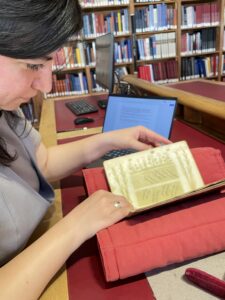
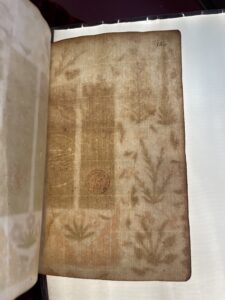
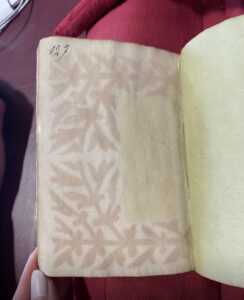
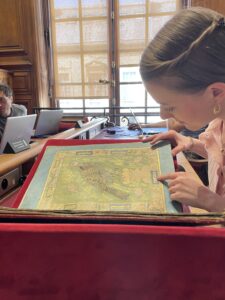
Negar focused her research on a remarkable range of Ottoman manuscripts featuring decorated papers, alongside European manuscripts incorporating silhouette paper. Among the highlights of her work was an album amicorum that she examined together with Theresa. This album proved particularly fascinating due to its rich variety of silhouette motifs, including delicately cut flowers and elegant cloud-band cartouches. The interplay between form, material, and ornament opened up exciting comparative perspectives between Ottoman and European practices.
This special access would not have been possible without the generous support of the conservator Sabine Maffre, whose support and suggestions greatly enriched the encounter with the album. We are equally grateful to Khalid Chakor Alami, curator of Arabic and Persian manuscripts, who kindly confirmed our long manuscript lists and engaged in stimulating discussions about the material.
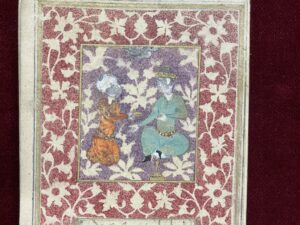
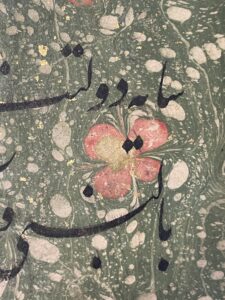
Meanwhile, Theresa immersed herself in a wide array of Mughal and Deccani manuscripts, as well as works featuring stencilled and experimental paper designs. The material ranged from 15th-century safīna formats containing wondrous imagery, to 17th-century papers adorned with stencil-marbled floral motifs, and exquisite muraqqaʿāt. These objects offered valuable insights into the global history of decorated paper, revealing both technical innovation and aesthetic refinement across regions and centuries.
Theresa dedicated the final three days of her stay to a specialised workshop on Islamic paper at the Institut national du patrimoine (INP) in Aubervilliers. This intensive course, led by Amélie Couvrat Desvergnes and Radha Pandey, brought together theory and practice in a deeply engaging way.
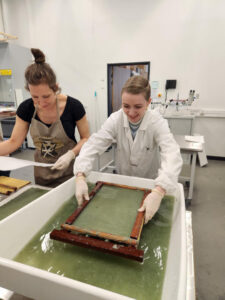
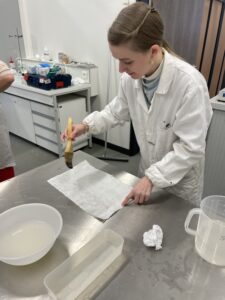

The workshop began with a comprehensive overview of the history and techniques of paper production across the Islamic world, tracing its development from Central Asia to al-Andalus, delivered by Amélie Couvrat Desvergnes. Participants explored materials, tools, and regional variations, gaining a clearer understanding of how historical context and artisanal practices shaped the material properties of paper. This knowledge is essential for conservation, enabling more precise condition assessments and informed restoration strategies, as well as for codicological analyses.
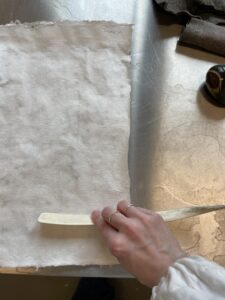
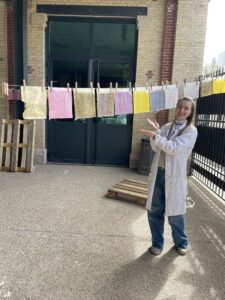
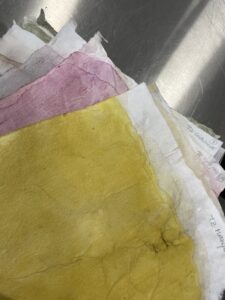
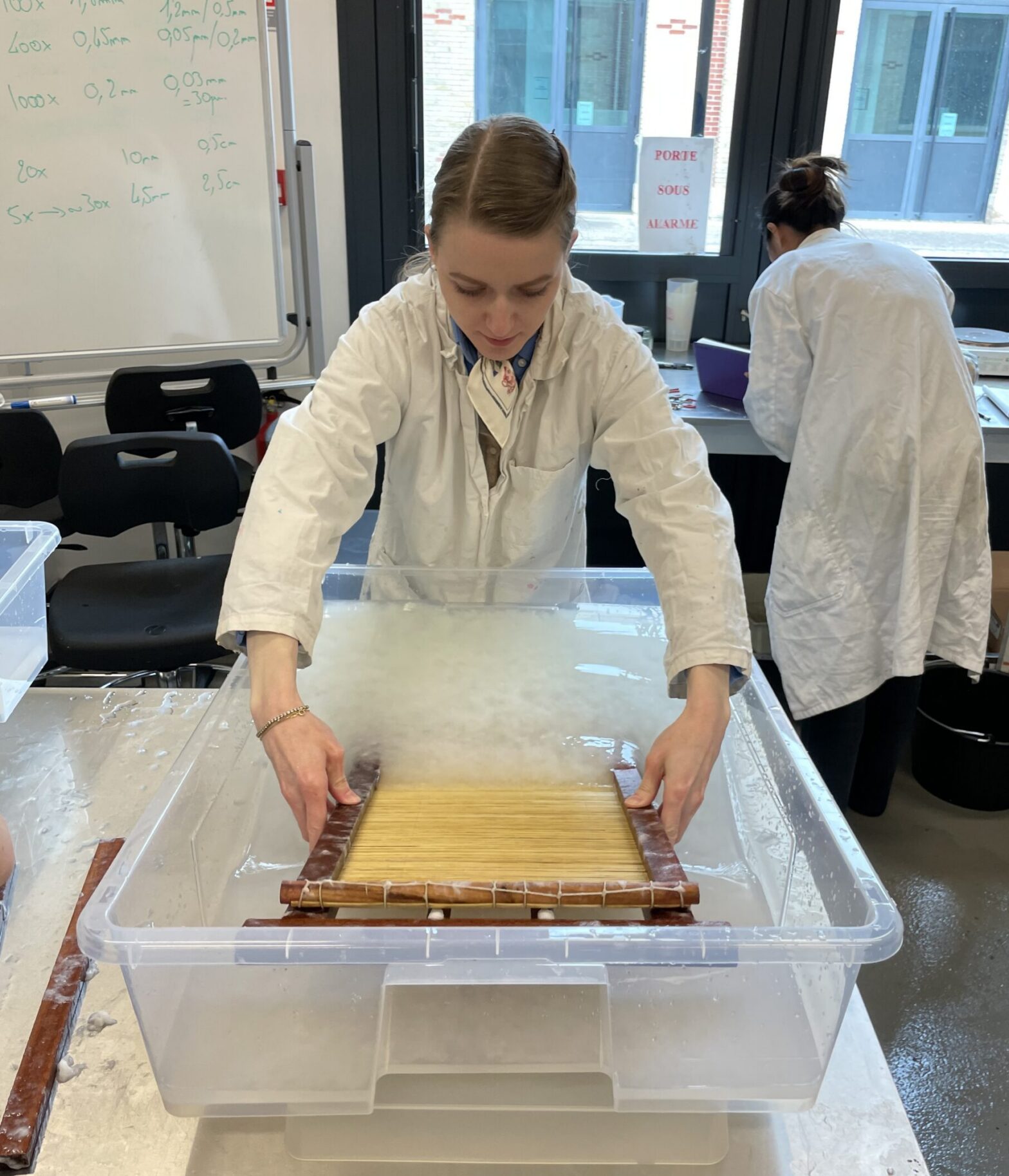
Particularly insightful was the hands-on component in the afternoons: under the guidance of Radha Pandey, participants produced their own paper using methods from India. From preparing linen fibres and forming sheets, to pressing, drying, dyeing, sizing, and burnishing, the process offered invaluable insight into the physical and tactile qualities of the material.
By combining historical knowledge with direct experimentation, the workshop fostered a critical understanding of paper as both a material and a cultural artefact. It encouraged participants to reflect on production processes and to develop sensitive, material-appropriate study approaches.
This research trip to Paris was not only intellectually rewarding but also a testament to the importance of collaboration – between scholars, conservators, and institutions. It reaffirmed the value of close material study and shared expertise in uncovering the layered histories of manuscripts and the papers that bring them to life.