
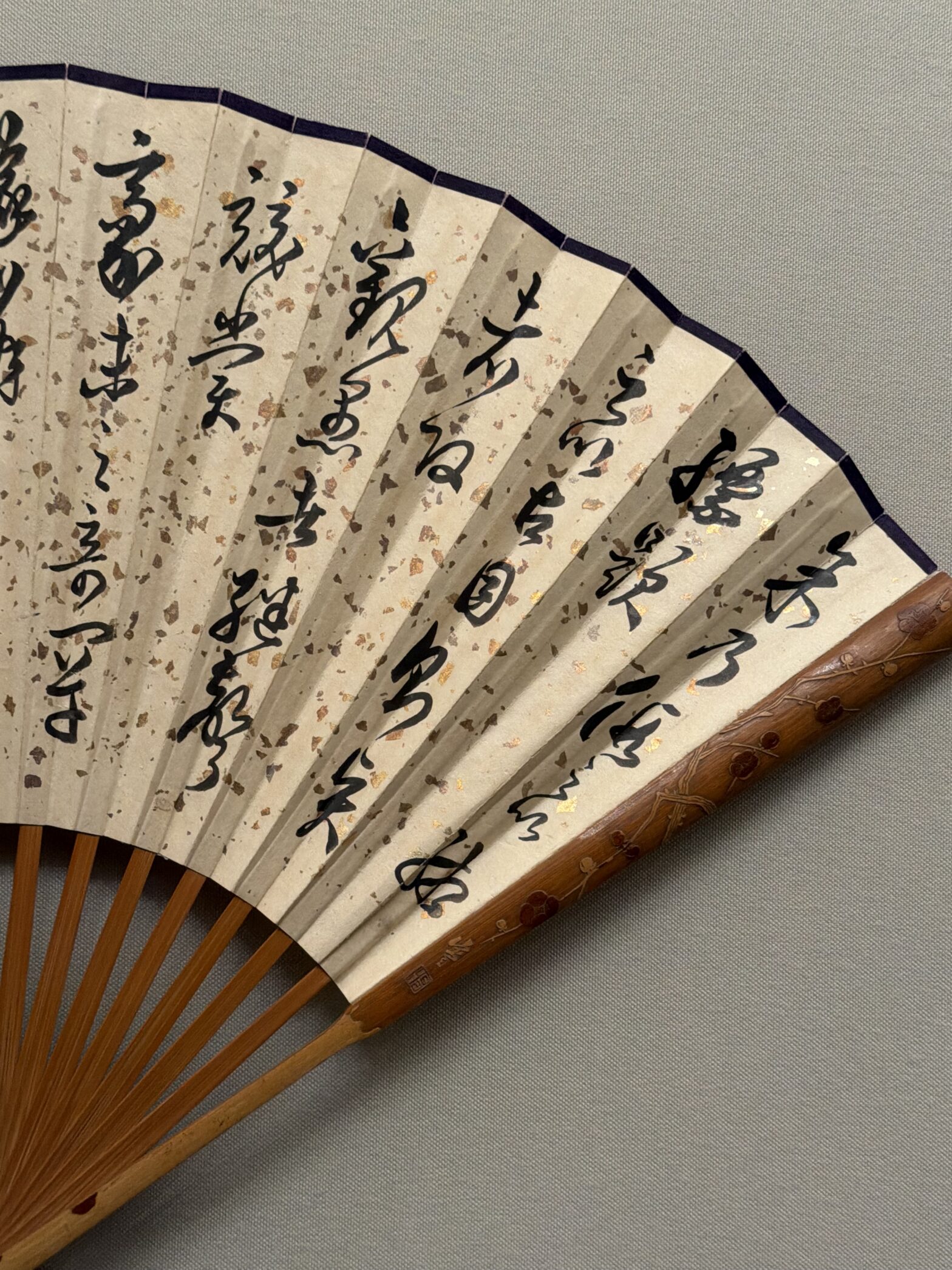
In early November 2026, Ilse Sturkenboom, Negar Kazemipourleilabadi and Theresa Zischkin travelled to Hong Kong to represent GLOBAL DECO PAPER at the Symposium on the Preservation of Ancient Books and Archival Collections at the University of Hong Kong (HKU). After arriving, they spent some time exploring the city and visiting the Hong Kong Palace Museum before the symposium officially began on 9 November.
The first day brought together research on the history of books and the practical challenges of preserving them. Talks traced the compilation of the Jiaye Library catalogue, HKU’s acquisition of part of the collection and the survival of rare Northern Song woodblock editions. Other speakers discussed exchanges between East Asian and Western conservation practices and China’s national programme for the preservation of ancient books. The conservation session ranged from fungal staining, microbial communities and paper ageing to the treatment of stele rubbings, the development of conservation papers, bookboard reattachment and the restoration of a Ming imperial edition. Speakers also considered how shared terminology, documentation and ethical principles can support collaboration across disciplines. Ilse, Negar and Theresa presented the joint paper Decorated Paper Across Asia: Chinese Paper Traditions and Their Transformations in Islamicate Manuscript Cultures, which included a contribution by Yih-chuen Liao. The lively Q&A turned toward what similarities between Chinese and Islamicate decorated papers can tell researchers about the circulation of techniques, particularly where evidence for direct exchange is limited.
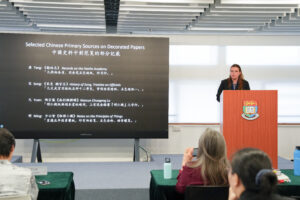
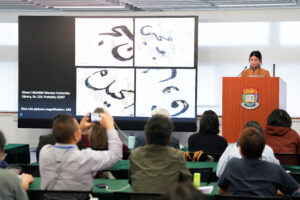
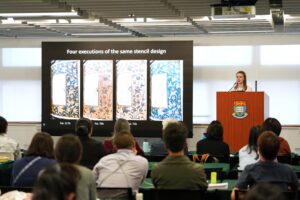
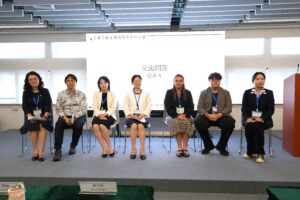
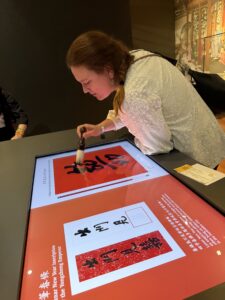
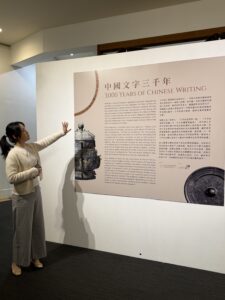
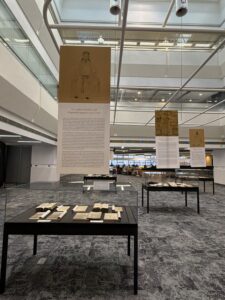
The second day began at HKU’s University Museum and Art Gallery, where a fascinating exhibition on Chinese calligraphy invited the team to look closely, for instance, at the use of colour in print to distinguish a calligrapher’s work from later commentary, as well as at writing on bone, bronze, stone, and silk. At the HKU Libraries, staff showed them how they prepare fragile documents for high-resolution digitisation, record metadata and house conserved materials in acid-free enclosures so that they remain accessible to researchers. The exhibition on the Jiaye Library then brought the team back to the previous day’s talks. Collectors’ seals, prefaces and poems offered glimpses into how books passed from one collection to another and how their owners hoped to preserve them for future generations. Among the details that caught the team’s attention was the appreciation of waxed Song-dynasty papers.
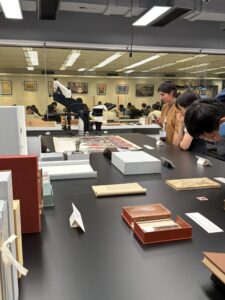
In the HKU conservation lab, the director introduced the team to the small lab within the library and discussed, among other things, what it takes to keep a book usable. Earlier repairs can leave a binding too stiff to open safely, so decisions about what to retain and how to support a volume matter directly to readers. The lab’s glass-fronted workspace also allows students and visitors to observe conservation in practice.
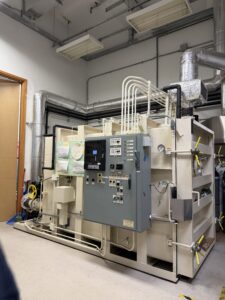
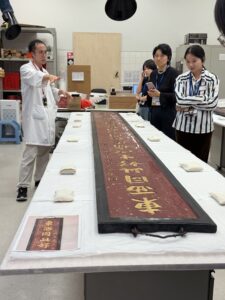
In the afternoon, they visited the conservation laboratories at the Hong Kong Heritage Museum. Staff introduced them to their approach to pest management and showed how microscopic examination can reveal successive layers of paint that are invisible to the naked eye. A particularly memorable example was a set of Chinese scripts for plays printed on bamboo paper using a reusable clay surface. Conservators drew on oral accounts to reconstruct the printing process, while the water sensitivity of the ink shapes how the scripts can be treated. For the GLOBAL DECO PAPER team, it was a chance to see how reconstructing a historical technique can inform the care of the objects it produced.
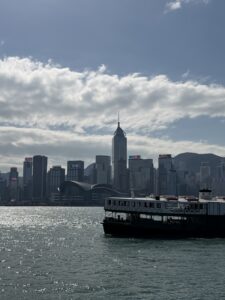
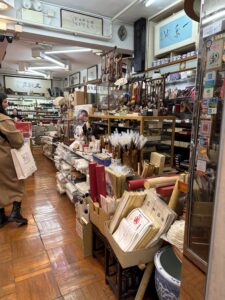
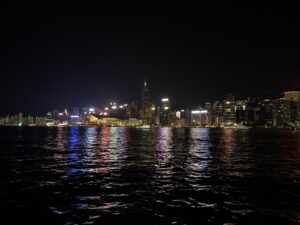
On their final day in Hong Kong, they visited the Hong Kong Museum of Art and explored the antique stalls along Cat Street and local stationery shops, where they took a closer look at brushes, inks and different kinds of paper. Negar and Theresa have since headed back to Munich, while Ilse has continued to Shanghai for a follow-up research trip. Stay tuned!
The GLOBAL DECO PAPER team warmly thanks the organisers for the invitation and for making space for such a generous exchange. They especially enjoyed the conversations with their hosts at HKU and with colleagues from Singapore and across China, which continued from the symposium room into the galleries, library and conservation labs.