
From Hong Kong to Shanghai: Continuing the Conversation on Decorated Paper
After the Symposium on the Preservation of Ancient Books and Archival Collections at the University of Hong Kong, Ilse Sturkenboom continued to Shanghai for a follow-up visit on behalf of GLOBAL DECO PAPER. She arrived in the evening and took some time to rest before her first meeting the next morning.
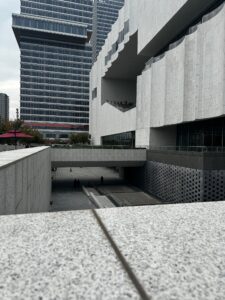
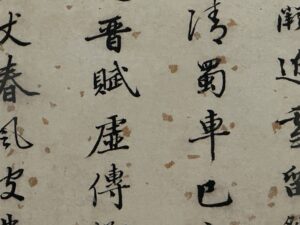
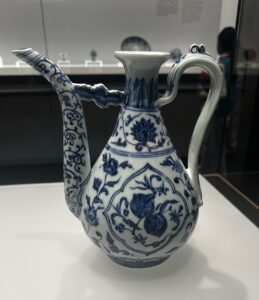
On 12 November, Ilse met with conservator Ms Xu Wenjuan at Shanghai Museum East. They discussed decorated paper in the museum’s collections and explored possibilities for future analyses. Among the objects Ilse saw were Ming-period handscrolls and fans made with gold-flecked paper, as well as blue-and-white porcelain ewers whose forms drew on Timurid metalwork. The ewers offered an example of how forms travelled across Asia and were adapted to different materials, a question that also informs the project’s research on decorated paper.
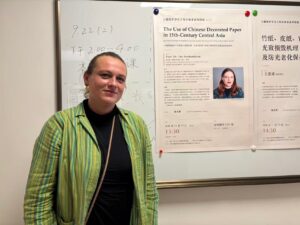
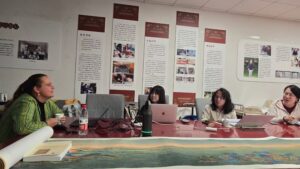
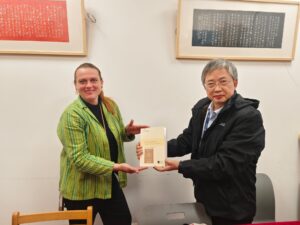
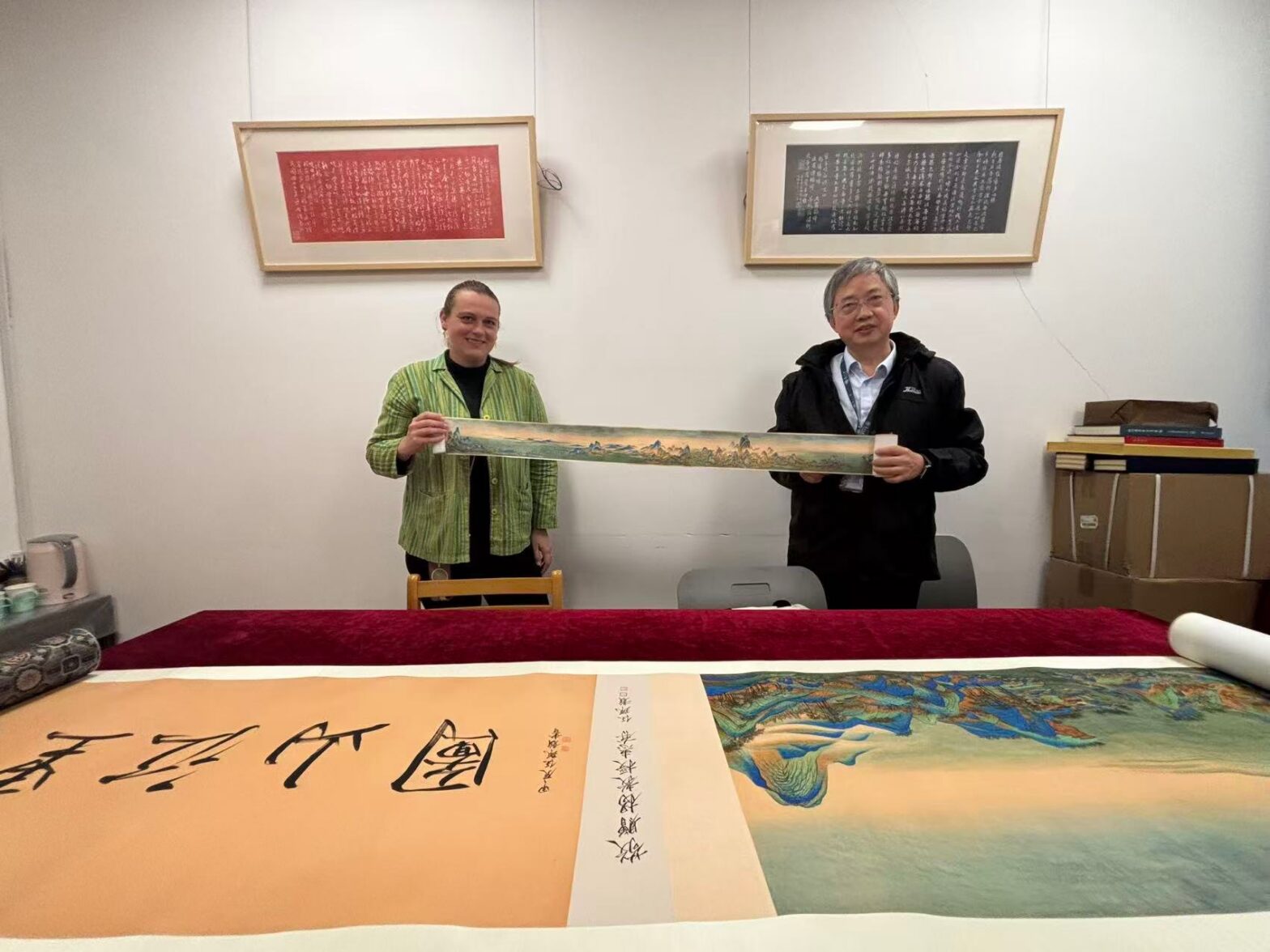
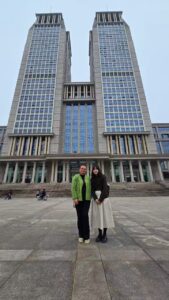
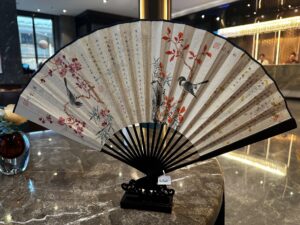
The following day, Professor Guanghui Yang of Fudan University invited Ilse to lunch before her afternoon talk at the university. Participants joined both in person and online, including colleagues from the Palace Museum in Beijing. A lively discussion followed, and Ilse received a miniature facsimile handscroll as a gift. She then attended a talk on protecting paper from sunlight. She also found two decorated-paper fans; one with gold flecks and another painted with birds and flowers, a subject that recalled the bird-and-flower imagery on the frontispiece.
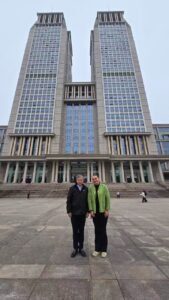
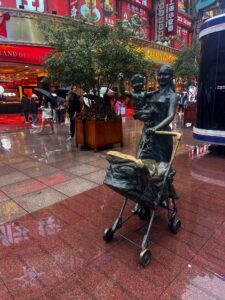
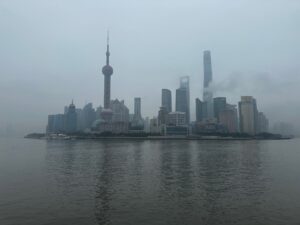
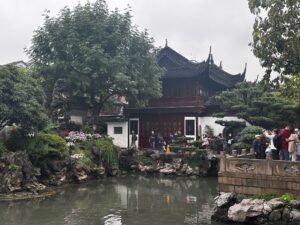
On 14 November, Ilse visited the Shanghai Museum’s People’s Square site and walked along Nanjing Road to the Bund. From the waterfront, she saw the Lujiazui skyline in the rain, with the Shanghai World Financial Center visible across the Huangpu River. The Bund’s former banks and trading houses recall Shanghai’s rise as a commercial centre, while the towers on the opposite bank show how the city’s financial district has developed across the river. Ilse ended the day at Yu Garden (Yuyuan), a classical Chinese garden in Shanghai’s old city. The Ming official Pan Yunduan began laying it out in 1559. Its rockeries, ponds and pavilions create a succession of views as visitors move through the garden, giving a sense of how much variety a Ming garden could achieve within a small space.
Ilse returned the next day with new contacts, ideas for future research and conversations to continue. Many thanks to everyone who welcomed her in Shanghai and took part in the discussions, and to everyone who helped plan the visit, including Yih-chuen Liao for setting the arrangements in motion and Yan Lin for coordinating the subsequent correspondence.