
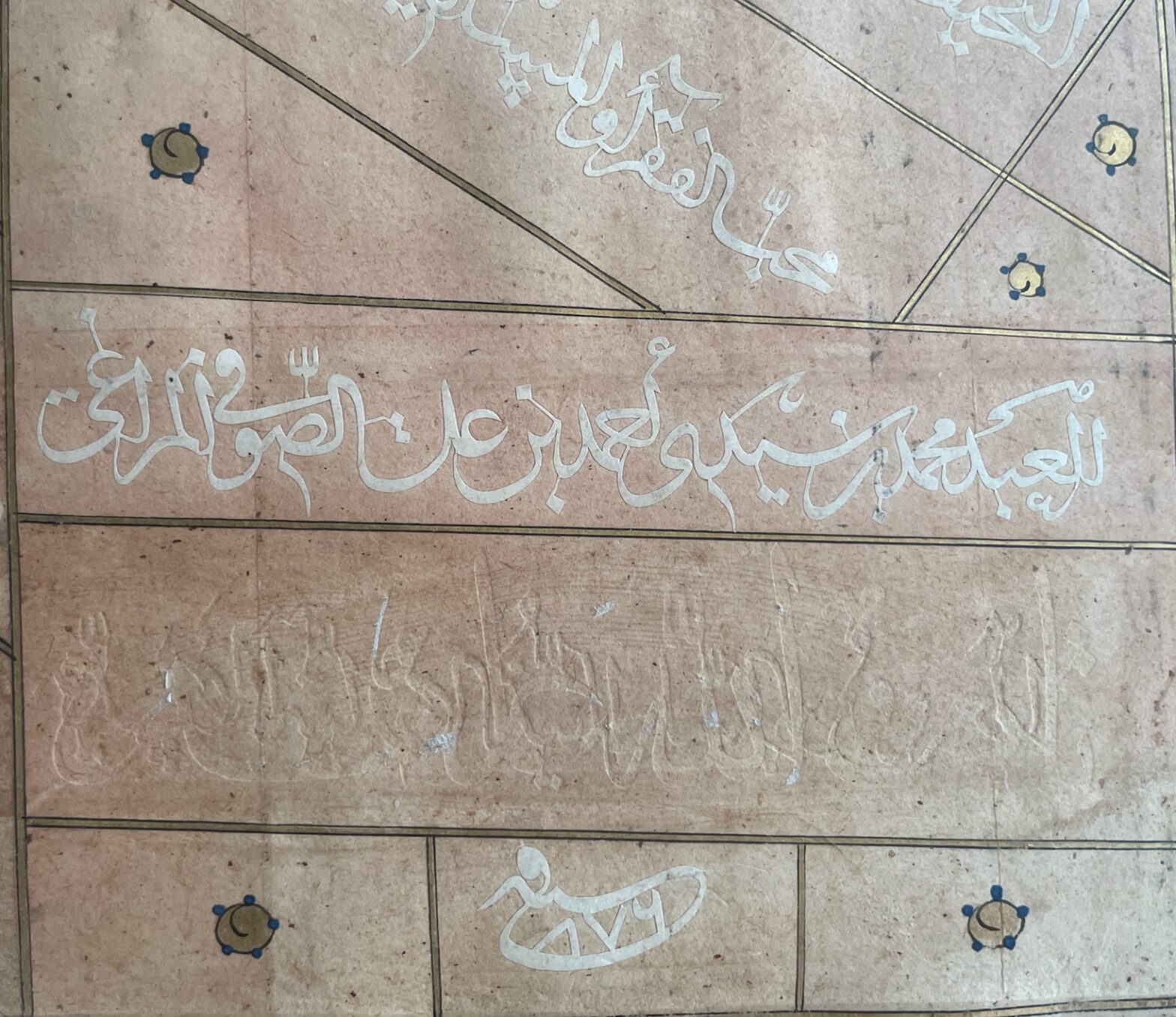
In the second week of her research trip to Istanbul, Negar focused particularly on manuscripts from the Turkish and Islamic Arts Museum collection housed in the Süleymaniye Library. During this period, she examined a selection of monumental manuscripts that offered valuable insights into the diversity of materials and artistic practices within the Islamic manuscript tradition.
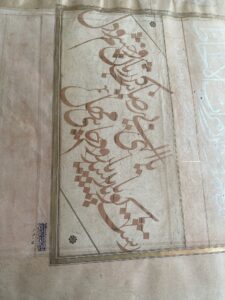
Among the works she studied was an exceptionally large manuscript with impressive dimensions of approximately 55 × 35 cm, with 700 pages, distinguished by its striking and highly unusual marginal decorations. The scale of the manuscript and the distinctive design of its borders suggested a prestigious commission and reflected sophisticated artistic planning in both layout and ornamentation.
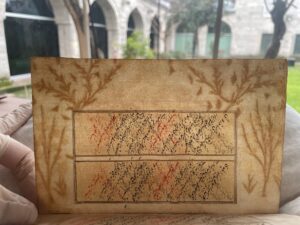
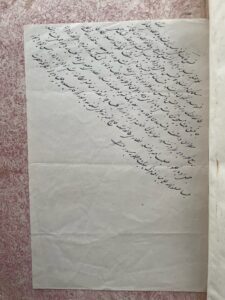
She also closely examined several manuscripts produced on silhouetted paper, demonstrating refined decorative techniques and careful craftsmanship in the preparation of the writing surface. During her research, she identified additional examples of silhouetted paper, a material decoration that has previously been considered very rare in the scholarship but may, in fact, be more common than previously assumed. This observation opens new questions regarding the production, circulation, and classification of decorated papers within Islamic manuscript traditions.
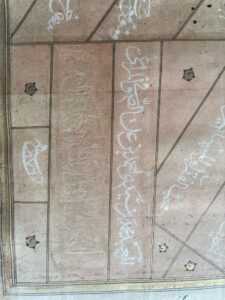
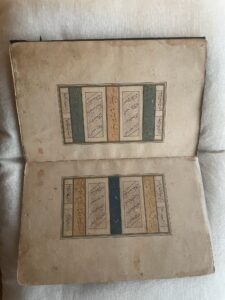
In addition, she encountered a remarkable example of Timurid cut-out paper, which may represent one of the earlier surviving specimens of this technique and provides important material evidence for the history of paper arts.
Through the study of these monumental and technically diverse manuscripts, Negar was able to expand her observations on materials, formats, and decorative strategies, contributing significantly to her broader research on the history of illumination and manuscript production in the Islamic world.